
How BRAC Funds Its Education Empire:
Donors, CSR & Social Enterprises
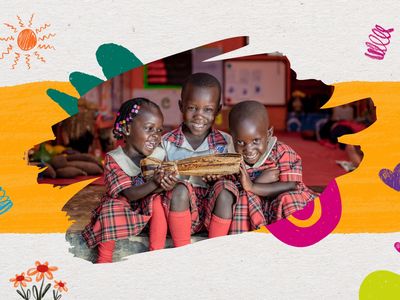
"Running 3,000+ schools, educating 15 million children, and reaching the remotest corners of Bangladesh — none of it is possible without a robust, diversified financing engine."
When people admire BRAC's education programme for its scale and impact, one critical question often goes unasked: Who pays for all of this? The answer lies in a remarkably sophisticated, three-pillar financing model that blends international generosity, corporate responsibility, and self-generated business revenue. Let's unpack how BRAC's education machine stays funded.
1. International Donor Agencies: The Global Backbone
The largest and most visible stream of BRAC's education funding comes from international development partners and donor agencies. These are not one-off charity cheques — they are long-term, strategic partnerships built on shared goals of poverty alleviation, gender equality, and universal education.
🌍 Key International Partners
- Global Affairs Canada (GAC): One of BRAC's most consistent partners, GAC funds large-scale education and girls' empowerment programmes across Bangladesh and beyond.
- FCDO (UK Foreign, Commonwealth & Development Office): Formerly DFID, FCDO provides substantial grants for education in crisis settings, including refugee camps and disaster-affected regions.
- UNICEF: Partners with BRAC for early childhood education, child protection, and inclusive education for children with disabilities.
- Education Above All (EAA) Foundation: Funds BRAC's work in reaching out-of-school children in Bangladesh and other countries.
- European Union (EU): Supports multi-year education and skills development projects.
- World Bank & Asian Development Bank: Provide programmatic and policy-level financing for education sector improvements.
📋 Characteristics of Donor Funding
- Project-based: Each grant targets a specific programme, region, or demographic
- Result-oriented: Donors demand measurable outcomes — enrollment numbers, pass rates, gender parity
- Audit-heavy: Rigorous financial reporting, third-party evaluations, and impact assessments
- Co-financing: Many donors require BRAC to contribute a portion of the budget from its own resources
This donor ecosystem gives BRAC the financial muscle to launch and sustain large-scale programmes. However, it also creates dependency risks — which is exactly why BRAC has aggressively built its other two funding pillars.
2. Corporate Social Responsibility (CSR): The Private Sector Bridge
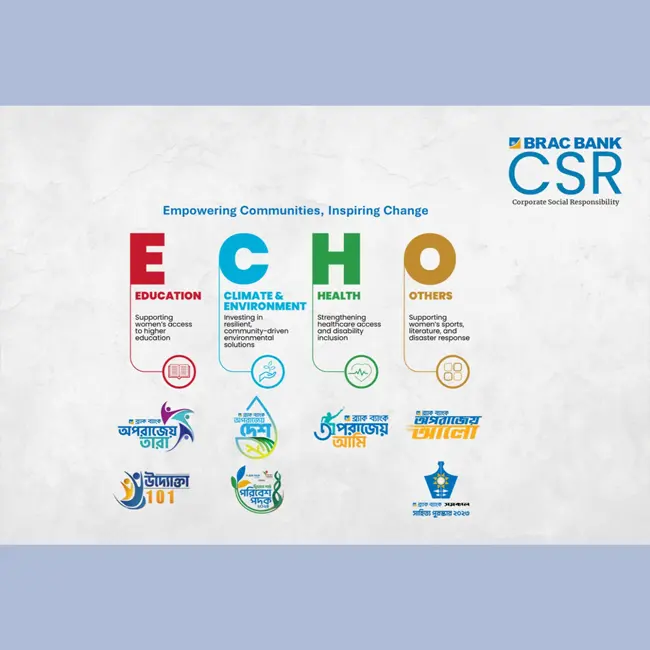
The second pillar of BRAC's education financing comes from the private sector — both local Bangladeshi companies and multinational corporations operating in the country. Through Corporate Social Responsibility (CSR) initiatives, these businesses partner with BRAC to fund schools, scholarships, infrastructure, and digital learning tools.
🏢 How CSR Partnerships Work
Unlike donor grants, CSR partnerships are often more flexible and relationship-driven. A company may choose to:
- Fund the construction of a school in a community where it operates
- Provide scholarships for underprivileged girls to complete secondary education
- Donate laptops, tablets, or internet connectivity for digital classrooms
- Sponsor teacher training programmes or vocational skills centres
- Support BRAC's humanitarian education response during floods or cyclones
🤝 Types of Corporate Partners
- Local conglomerates: Bashundhara, Square, PRAN-RFL, Transcom, and others regularly fund education initiatives
- Multinational corporations: Unilever, Samsung, Huawei, and international banks contribute through global CSR frameworks
- Telecom companies: Grameenphone, Robi, and Banglalink support digital education and remote learning programmes
- Financial institutions: Banks and insurance companies fund financial literacy and adolescent empowerment programmes
CSR funding is particularly valuable because it often supports innovation and pilot projects that traditional donors may consider too risky — such as AI-based learning apps, virtual reality classrooms, or gamified education platforms.
3. BRAC's Own Social Enterprises: The Self-Sustaining Engine
Perhaps the most unique and powerful aspect of BRAC's financing model is its social enterprise ecosystem. BRAC does not rely solely on donations. It runs a portfolio of profitable businesses — and channels a significant portion of those profits directly into its education, health, and development programmes.
This is what makes BRAC fundamentally different from most NGOs. It is a hybrid organization — part charity, part business — with a mission to use commerce as a tool for social good.
Aarong: Fashion with a Purpose
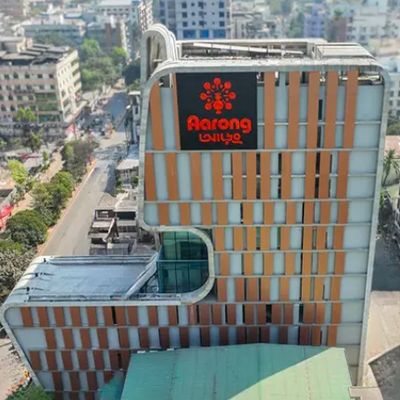
Aarong is Bangladesh's leading fair-trade fashion and lifestyle brand. With over 20 retail outlets and an extensive e-commerce presence, Aarong sells handcrafted textiles, jewellery, and home décor made by rural artisans — 85% of whom are women.
But Aarong is not just a store. It is a social enterprise that:
- Provides fair wages and market access to 65,000+ rural artisans
- Generates substantial annual revenue
- Reinvests profits into BRAC's education, healthcare, and microfinance programmes
Every time someone buys a handwoven saree or a terracotta vase from Aarong, a portion of that sale helps keep a BRAC school running in a remote village.
BRAC Bank: Banking for the Unbanked
BRAC Bank is one of Bangladesh's leading private commercial banks. While it operates as a full-service financial institution, its founding mission was to serve the unbanked and underbanked population — particularly small and medium entrepreneurs.
BRAC Bank contributes to education financing through:
- Profit reinvestment: A portion of annual profits flows back to BRAC's development programmes
- CSR programmes: Direct funding for scholarships, school infrastructure, and girls' education
- Financial literacy: Integrating money-management education into BRAC's adolescent programmes
Other Social Enterprises
Beyond Aarong and BRAC Bank, BRAC operates a diverse portfolio of social businesses:
- BRAC Dairy & Food Project: Processes and sells milk from rural farmers, creating income and reinvesting surplus
- BRAC Seed & Agro Enterprise: Provides quality seeds and agricultural inputs to small farmers
- BRAC Printing Pack: A commercial printing and packaging business
- BRAC Cold Storage: Supports the agricultural value chain
- BRAC Learning Centre (BLC): Corporate training and professional development services
4. The Three-Pillar Financing Mix: Why It Matters
BRAC's genius lies not in any single funding source, but in how it balances and integrates all three:
Scale & Credibility
Flexibility & Innovation
Sustainability & Autonomy
🎯 Strategic Benefits of the Mixed Model
- Risk diversification: If one donor pulls out, CSR and enterprise revenue cushion the blow
- Operational independence: Self-generated funds allow BRAC to innovate without donor permission
- Scalability: Enterprise profits can be scaled up through business growth, not just grant applications
- Community trust: Local funding sources (CSR + enterprises) enhance BRAC's legitimacy within Bangladesh
- Crisis resilience: During COVID-19, when donor budgets tightened, social enterprise revenue helped BRAC keep schools running through radio and phone-based learning
5. Financial Transparency & Accountability
With such a complex funding structure, transparency is non-negotiable. BRAC maintains one of the most rigorous financial accountability systems in the NGO world:
- Annual audits: All programmes are audited by independent international audit firms
- Donor reporting: Detailed quarterly and annual financial and narrative reports submitted to every donor
- Public disclosures: Annual reports and financial statements are published online for public scrutiny
- Internal controls: Multi-layer approval processes for expenditures, procurement, and payroll
- Impact verification: Third-party evaluators (like the World Bank's Independent Evaluation Group) regularly assess programme effectiveness
This level of accountability is why BRAC has maintained the trust of donors, governments, and corporate partners for over five decades.
6. Conclusion: A Model for the Future
The BRAC Education Programme is not just a story of teaching children — it is a story of financial innovation. By combining international grants, corporate partnerships, and self-sustaining social businesses, BRAC has built a funding model that is:
- Resilient — able to weather economic and political shocks
- Scalable — capable of growing without proportional increases in donor dependency
- Sustainable — designed to outlast any single funding source
For other NGOs and development organizations around the world, BRAC's three-pillar financing system offers a blueprint. It proves that doing good and doing business are not opposites — they can be powerful partners in the fight against poverty and illiteracy.