
The Invisible Guardians:
How BRAC's School Management Committees Keep Schools Alive
"A school built by an NGO can last a year. A school owned by a community lasts a generation."
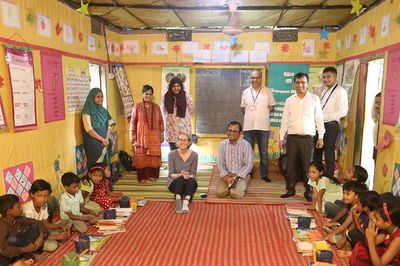
Every BRAC school — whether it sits in a bamboo hut on a river char, a rented room in a village home, or a colourful classroom in a Rohingya camp — has something invisible but extraordinarily powerful behind it: a School Management Committee (SMC).
This is not a bureaucratic formality. It is the beating heart of BRAC's education model. While BRAC provides the curriculum, the teacher training, and the initial resources, it is the SMC that breathes life into the school every single day. Made up of local elders, parents, and community volunteers, the SMC ensures that the school is not an outsider's project — it is the community's own institution.
1. Community Ownership: The School Belongs to the Village
The first and most fundamental role of a BRAC School Management Committee is to create a sense of collective ownership. When a school is seen as "BRAC's school," parents feel no obligation to send their children. When it is seen as "our school," everything changes.
👥 Who Sits on the SMC?
A typical BRAC SMC is a 7-member body composed of:
- Local elders (Murubbis): Respected village leaders who lend social legitimacy and moral authority to the school
- Parents of enrolled children: Mothers and fathers who have a direct stake in the school's success
- Community social workers: Local activists and volunteers who bridge the gap between the school and the wider community
- BRAC teacher: The school teacher serves as a member-secretary, reporting on academic progress and operational needs
- Local government representatives: Union Parishad members or ward councillors who can advocate for the school at the administrative level
What the SMC Does for Ownership
- Inaugurates the school: The SMC officially opens the school in a community ceremony, signalling that this is a village institution
- Monitors teacher attendance: Committee members regularly check that the teacher is present and punctual — a critical factor in rural schools where teacher absenteeism is a chronic problem
- Oversees student enrollment: SMC members go door-to-door to identify out-of-school children and persuade parents to enroll them — especially girls
- Manages transitions: When BRAC students complete primary education, the SMC actively works to enroll them in government or private secondary schools
- Represents the school: The SMC liaises with local government, other NGOs, and BRAC's area offices on behalf of the school
2. Infrastructure & Environment Maintenance: Protecting the Learning Space
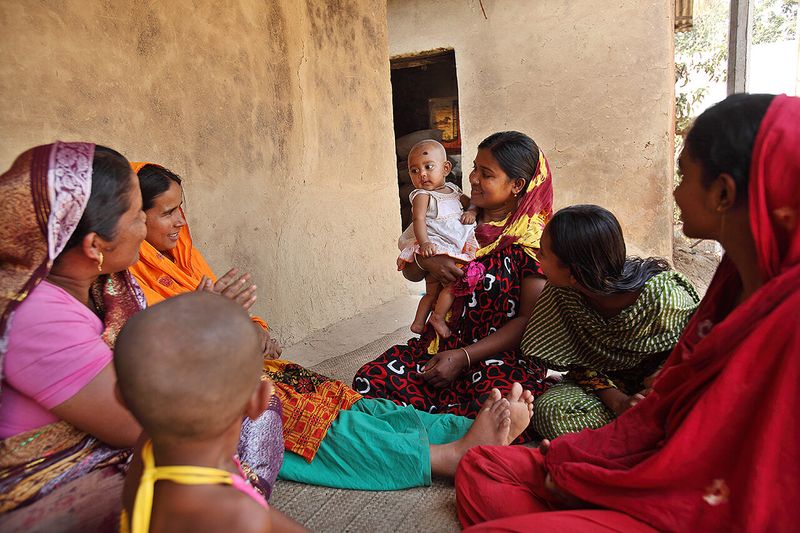
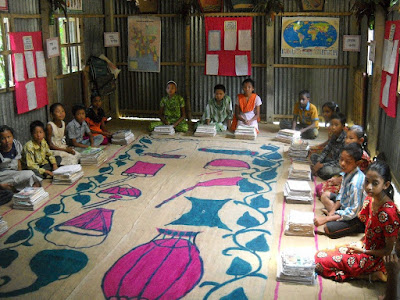
BRAC schools do not have fancy buildings. Most operate in rented rooms, bamboo structures, or community spaces. But what they lack in grandeur, they make up for in care — and that care comes directly from the SMC.
🔧 Regular Monitoring & Upkeep
The SMC conducts regular inspections to ensure the school environment is safe, functional, and child-friendly:
SMC Infrastructure Responsibilities
- Safety checks: Inspecting the physical structure for hazards — loose bamboo poles, leaking roofs, broken floors, or unsafe electrical connections
- Light and ventilation: Ensuring adequate windows, airflow, and natural lighting so children can study comfortably without eye strain
- Cleanliness & hygiene: Monitoring toilet facilities, handwashing stations, and overall sanitation — especially critical for girls' enrollment
- Child-friendly atmosphere: Encouraging colourful decorations, student artwork on walls, and a welcoming ambience that makes children want to come to school
- Furniture & supplies: Checking that mats, benches, blackboards, and learning materials are in good condition and replaced when worn out
- Rental management: Negotiating with the room owner, ensuring timely rent payments (often funded by BRAC), and resolving any disputes
🌿 Creating a Child-Friendly Environment
Beyond physical maintenance, the SMC plays a vital role in shaping the emotional and social environment of the school:
- They ensure the school is a safe space where children are protected from harassment, bullying, or discrimination
- They advocate for play and recreation — making sure children have space and time for physical activity
- They promote a culture of respect — where teachers treat children with dignity and parents trust the school with their daughters
- They organize community events — annual sports days, cultural programmes, and parent-teacher meetings that build social cohesion around the school
3. Dropout Prevention: The SMC as First Responder
Perhaps the most heroic work of the SMC happens quietly, behind the scenes, when a child stops coming to school. In traditional systems, a missing student is just a statistic. In BRAC's system, a missing student triggers an immediate, personal response from the SMC.
🚨 The Early Warning System
BRAC teachers report attendance daily. When a child is absent for even a few consecutive days, the SMC springs into action:
How SMC Members Prevent Dropouts
- Home visits: SMC members — often parents or neighbours — visit the child's home to understand why the child is not attending
- Identifying the root cause: Is it poverty? Is the family pulling the child out to work? Is there a marriage being planned? Is the child being bullied? Is there an illness?
- Direct problem-solving: SMC members do not just report problems — they solve them. If a family cannot afford books, the SMC arranges support. If a girl is being pressured to marry, the SMC intervenes with parents and elders
- Financial mediation: In cases of extreme poverty, the SMC connects families with BRAC's microfinance, ultra-poor graduation, or emergency relief programmes
- Re-enrollment advocacy: If a child has already dropped out, SMC members work relentlessly to bring them back — sometimes negotiating with employers to release child labourers, or convincing parents that education is a better investment than early marriage
💔 Common Crisis Scenarios & SMC Responses
The SMC deals with real, heartbreaking situations on a regular basis:
- Child marriage: When parents plan to marry off their 12-year-old daughter, SMC members — often including the local imam or elder — visit the family, explain the legal marriage age, and offer alternatives like continued schooling or vocational training
- Economic shock: When a family's breadwinner falls ill or loses work, children are the first to be pulled out of school. The SMC connects the family to BRAC's social protection programmes and sometimes raises funds from the community itself
- Gender-based restrictions: When parents stop sending a girl to school because she has reached puberty, SMC mothers share their own experiences and reassure parents about safety and modesty
- Migration: When families plan to migrate seasonally for work, the SMC helps arrange for the child to continue education at the destination or re-enroll upon return
- Disability stigma: When a child with disabilities is hidden at home, SMC members work with parents to challenge stigma and arrange for inclusive education support
4. The SMC as a Model for the World
BRAC's School Management Committee model is not unique in concept — many countries have SMCs. What makes BRAC's version extraordinary is the depth of engagement and genuine authority given to local people.
In many government systems, SMCs exist on paper but have no real power. In BRAC's system, the SMC is a living, decision-making body with tangible responsibilities and visible impact. BRAC deliberately designed it this way because the organization's founders understood a timeless truth:
Education cannot be imposed from the outside. It must be claimed from within.
5. Conclusion: The Unsung Heroes of Rural Education
When we celebrate BRAC's education achievements — 15 million children educated, 99.97% pass rates, millions of girls in school — we often focus on the teachers, the curriculum, and the donors. But behind every one of those numbers is a group of ordinary villagers who did extraordinary things.
The mother who knocked on a neighbour's door to ask why her daughter was not in school. The elder who convinced a father that his daughter was worth more than an early marriage dowry. The social worker who repaired a leaking roof with his own hands so class could continue during monsoon.
These are the members of BRAC's School Management Committees. They are not paid. They are not famous. But without them, the world's largest non-formal education system would simply not work.