
No Child Left Behind:
BRAC's Special Education & Inclusive Learning Initiatives
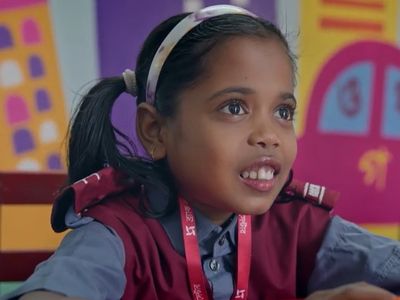
"Inclusion is not a strategy. It is a promise — that every child, regardless of ability, language, geography, or circumstance, has the right to learn."
While BRAC's mainstream education programme serves millions, its most profound work often happens in the margins — with children that traditional systems simply cannot reach. Children with disabilities. Indigenous children speaking languages the national curriculum ignores. Children living on floating chars, in flooded haors, or inside tea garden labour lines. And children who have lost everything — like the Rohingya refugees in Bangladesh's southeast.
This is the story of BRAC's special education initiatives — four extraordinary programmes that prove education has no boundaries.
1. Inclusive Education for Children with Special Needs
For decades, children with disabilities in Bangladesh were invisible. They were kept at home, hidden from society, and denied the most basic right to education. Deep-rooted stigma, lack of infrastructure, and untrained teachers created a wall that seemed impossible to break.
BRAC decided to tear that wall down.
♿ What BRAC's Inclusive Education Programme Delivers
- Specialized teaching methods: Teachers are trained in sign language, Braille, and differentiated instruction tailored to visual, hearing, physical, and intellectual disabilities
- Adapted learning materials: Custom textbooks, tactile learning tools, audio resources, and large-print materials
- Assistive devices: Wheelchairs, hearing aids, white canes, and other equipment provided free of cost
- Inclusive classrooms: Children with disabilities learn alongside their peers, not in isolated institutions — fostering empathy and breaking stigma from an early age
- Parental counselling: Families are guided on how to support their child's learning and development at home
- Community sensitization: Local awareness campaigns challenge the cultural belief that disability equals inability
The results are transformative. Children who were once considered "unteachable" are now reading, writing, and dreaming of futures as teachers, artists, and entrepreneurs. BRAC's inclusive education model has become a reference point for NGOs and governments across South Asia.
2. Education in Indigenous & Minority Languages
Bangladesh is home to over 45 indigenous and minority ethnic groups, each with its own rich language, culture, and identity. For generations, children from these communities — particularly in the Chittagong Hill Tracts, the plains of northern Bangladesh, and the tea garden regions — were forced to learn in Bangla, a language foreign to their homes.
The result? Massive dropout rates, cultural erosion, and a generation that felt neither fully Bangali nor fully connected to their own heritage.
🗣️ Mother-Tongue Based Multilingual Education (MTB-MLE)
BRAC's answer is Mother-Tongue Based Multilingual Education — a revolutionary approach that begins instruction in the child's native language before gradually introducing Bangla and English.
Hill Tracts Programme
In the Chittagong Hill Tracts, BRAC runs pre-primary and primary schools where children from Chakma, Marma, Tripura, Garo, and other indigenous communities begin their education in their mother tongue. Teachers are recruited from the same ethnic background, ensuring cultural sensitivity and linguistic accuracy.
The curriculum incorporates indigenous stories, songs, and cultural elements — so children see themselves reflected in what they learn, rather than feeling like outsiders in their own classrooms.
Tea Garden & Plains Communities
In the tea garden regions of Sylhet and Moulvibazar, where communities speak Sadri, Oraon, and other languages, BRAC has adapted its non-formal primary education model to begin in the children's home language. This simple shift has dramatically improved enrollment and retention rates among tea garden children, who were previously among the most educationally marginalized groups in Bangladesh.
3. Education in Climate-Affected & Remote Areas
Bangladesh is one of the most climate-vulnerable countries on Earth. Every year, millions of children living in haors (wetlands), chars (river islands), coastal belts, and tea garden labour lines see their schools submerged, washed away, or simply inaccessible for months at a time.
For these children, a traditional brick-and-mortar school is a luxury they cannot afford. BRAC responded not by building walls — but by building adaptability into the very design of education.
🚤 Floating Schools
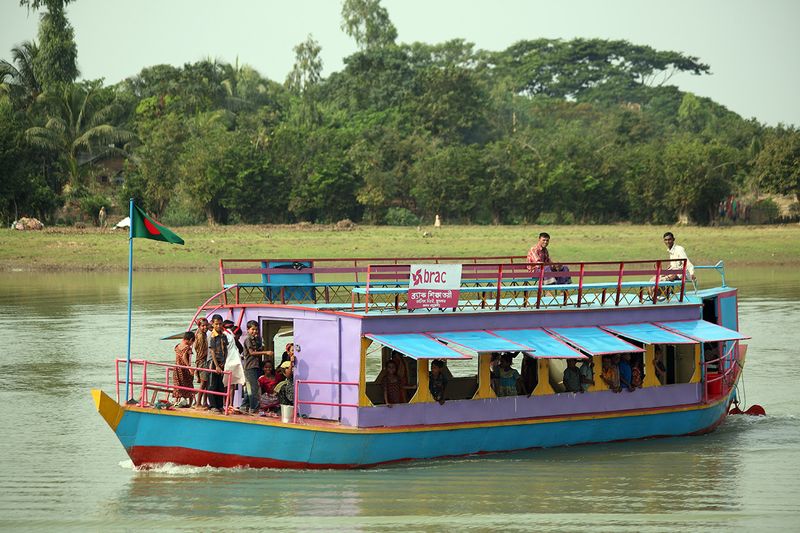
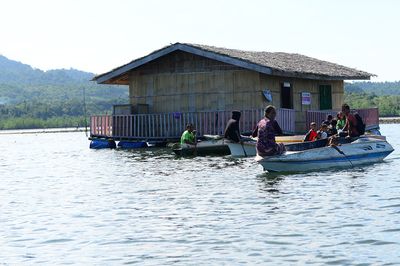
In the flood-prone haor regions of Sunamganj and Kishoreganj, where villages turn into lakes during monsoon season, BRAC operates boat schools — fully functional classrooms on boats that navigate through floodwaters to pick up children from their doorsteps.
These floating schools are equipped with:
- Classrooms, libraries, and computer labs on board
- Solar panels for electricity
- A collection of boats serving as school buses, libraries, and adult education centres
- Resilient schedules that adapt to the flood calendar
🏝️ Char & Remote Area Schools
For children living on river chars — temporary sand islands in the middle of mighty rivers like the Jamuna and Padma — BRAC sets up seasonal schools that move with the community. When a char erodes and families relocate, the school moves with them.
In tea garden labour lines, where workers' children often join their parents in the fields instead of attending school, BRAC runs afternoon and flexible-timing schools that fit around the agricultural calendar.
🌊 Climate-Resilient Infrastructure
BRAC also builds elevated schools on stilts in flood-prone areas and uses locally available, low-cost materials like bamboo and tin to construct classrooms that can be quickly rebuilt after cyclones or river erosion.
4. Rohingya Humanitarian Education: Education in Emergencies
Since August 2017, over 740,000 Rohingya refugees fled genocide in Myanmar and settled in Cox's Bazar, Bangladesh — making it the world's largest refugee camp. Among them were nearly 400,000 children, traumatized, displaced, and with no access to education.
BRAC was among the first organizations to respond, and today it is the largest education provider in the Rohingya camps, operating an extensive Education in Emergencies (EiE) programme.
📚 What BRAC Delivers in the Camps
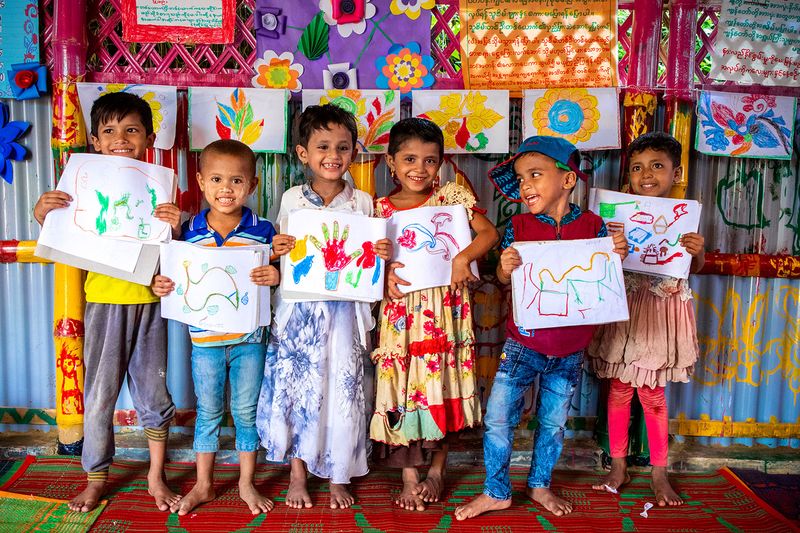
- Child-Friendly Spaces (CFS): Safe learning and play spaces for young children to heal from trauma through structured activities, art, and play
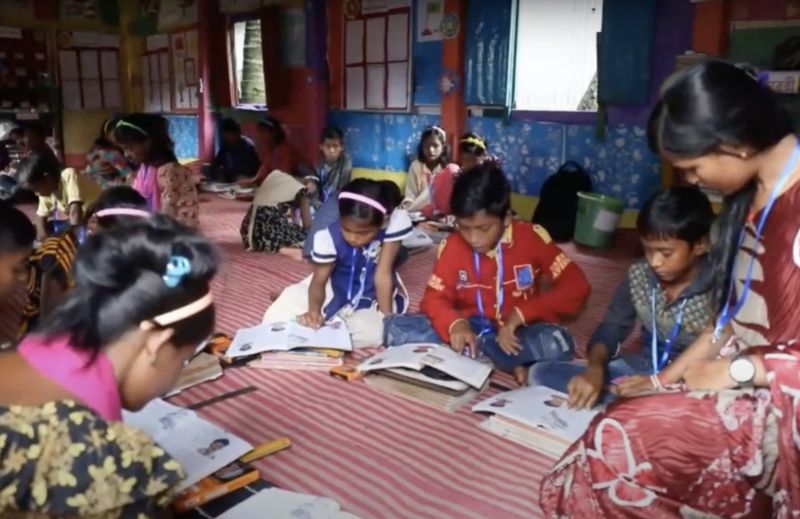
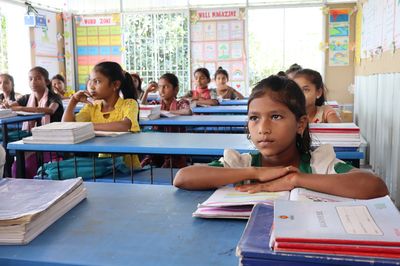
- Learning Centres: Over 2,500 learning centres providing basic literacy, numeracy, and life skills to Rohingya children
- Adolescent Learning Centres: Spaces for older children who have missed years of schooling, offering accelerated learning and psychosocial support
- Play Labs: Play-based early childhood development for the youngest refugees
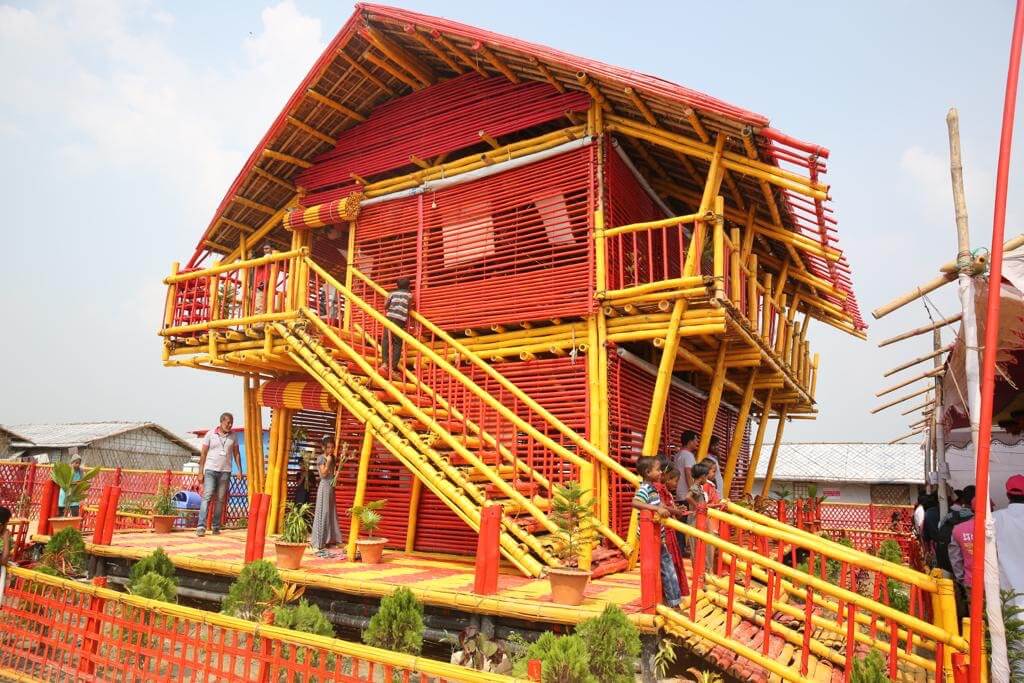
- Two-Storey Learning Centres: Innovative multi-level bamboo structures that maximize limited camp space
- Bhasan Char Operations: BRAC has expanded its education services to Bhasan Char, the remote island where thousands of Rohingya have been relocated
🧠 Psychosocial Support & Trauma-Informed Teaching
BRAC teachers in the camps are trained in trauma-informed pedagogy. They recognize signs of distress, use calming techniques, and create classrooms where children feel safe to express themselves. Art, music, and storytelling are used not just as teaching tools, but as therapy.
👩🏫 Rohingya Teachers
BRAC recruits and trains Rohingya community teachers — young men and women from the camps who speak the children's language and understand their culture. This not only creates livelihood opportunities within the refugee community but also ensures that education is culturally relevant and trusted.
5. The Common Thread: Dignity Through Inclusion
Whether it is a deaf child learning sign language in a rural village, a Chakma girl reading her first book in her mother tongue, a boy rowing to his floating school during monsoon floods, or a Rohingya refugee drawing pictures of hope in a bamboo classroom — the common thread is the same:
BRAC sees every child. And BRAC refuses to leave any child behind.
These special initiatives are not "add-ons" to BRAC's education programme. They are its moral core. They represent the organization's deepest conviction — that education is not a privilege for the privileged few, but a fundamental right for every human being, regardless of the circumstances of their birth.
6. Conclusion: Education Without Borders
BRAC's special education initiatives prove that the barriers to education are not natural — they are man-made. And what is man-made can be unmade.
Disability is not inability. Language is not a barrier — it is a bridge. Floods do not have to mean school closures. And displacement does not have to mean the end of childhood.
Through innovation, compassion, and relentless commitment to the marginalized, BRAC has built an education system that truly lives up to its name: inclusive. Not as a slogan, but as a daily practice.