
How BRAC Education Program Operates:
A Model That Changed Millions of Lives
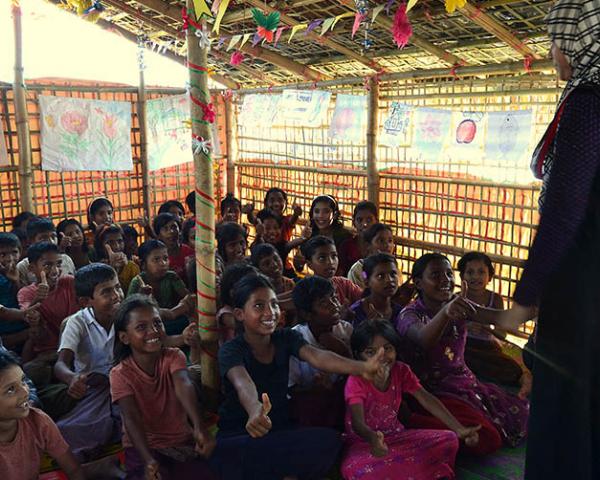
When we talk about transformative education models in the developing world, one name stands out above the rest — BRAC. Founded in 1972 in Bangladesh, BRAC (Bangladesh Rural Advancement Committee) has grown into the world's largest private, secular education system, reaching millions of children who would otherwise be left behind. But how exactly does this massive education machine work? Let's dive deep into the mechanics of the BRAC Education Programme (BEP).
1. The Foundation: Why BRAC Started
The story of BRAC's education program began not in a boardroom, but in a village. In 1984, a member of a BRAC Village Organisation asked a simple but powerful question: "What about our children?" This question sparked what would become a global revolution in non-formal education.
Bangladesh, despite making remarkable progress in education, still faced massive challenges:
- Over 1.3 million primary school-age children had no access to education
- High dropout rates due to poverty and gender discrimination
- Overcrowded classrooms with student-teacher ratios as high as 51:1
- Children from ethnic minorities and disabled children were completely excluded
BRAC designed its school system to address every single reason children couldn't attend school — poverty, distance, gender barriers, disability, and language.
2. The Five Pillars of BRAC Education
The BRAC Education Programme (BEP) operates through five major interconnected components. Each pillar addresses a specific gap in the education landscape:
🎒 Non-Formal Primary Education (NFPE)
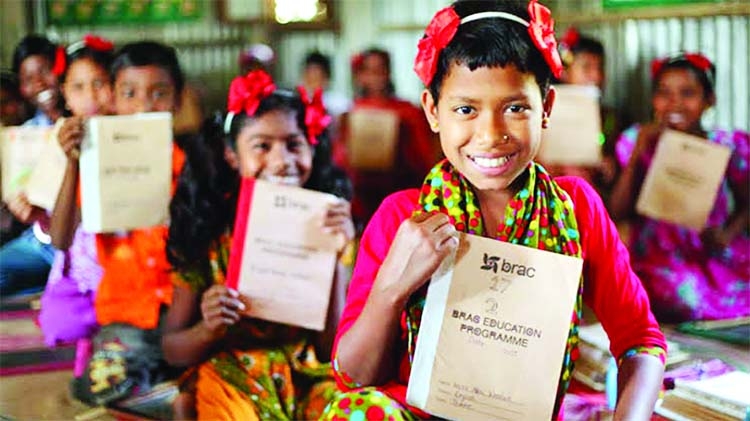
This is the backbone of BRAC's education model. NFPE provides free, quality primary education to children from the poorest families who are not served by government or private schools. These schools follow the national curriculum but are delivered in a child-friendly, accelerated format. Classes are small (25-33 students), and the teaching methods are highly interactive and participatory.
🧸 Pre-Primary Schools
BRAC runs pre-primary schools that prepare children aged 5+ for formal primary school entry. To date, over 6 million children have successfully completed the pre-primary level, with approximately 61.4% of them being girls who transitioned smoothly into primary schools.
👧 Adolescent Development Programme (ADP)
Perhaps one of BRAC's most innovative components, ADP creates "Kishori Kendros" (Girls' Clubs) — safe spaces where adolescent girls aged 10-19 can learn life skills, financial literacy, health awareness, and vocational training. With over 9,000 clubs running in Bangladesh alone, this program empowers vulnerable girls to avoid child marriage and build independent futures.
📚 Multi-Purpose Community Learning Centres (Gonokendros)
These community libraries and learning centres provide continued education, IT facilities, and reading materials for entire communities. What's remarkable is that 88% of Gonokendros are self-funded by the communities themselves after initial BRAC support.
🏫 Mainstream Secondary School Support
BRAC doesn't just stop at primary education. It builds the capacities of rural secondary school teachers and improves classroom pedagogy to enhance the overall quality of secondary education nationwide.
3. How BRAC Schools Actually Run
What makes BRAC's model so effective and scalable? The answer lies in its brilliantly simple operational design:
🏠 Community-Rented Spaces
BRAC schools don't build expensive infrastructure. Instead, they rent premises from the community — a room in a house, a community centre, or a simple bamboo structure. This keeps costs extremely low (approximately $45 per learner per year) and ensures the school is located right in the heart of the village.
👩🏫 Local Female Teachers
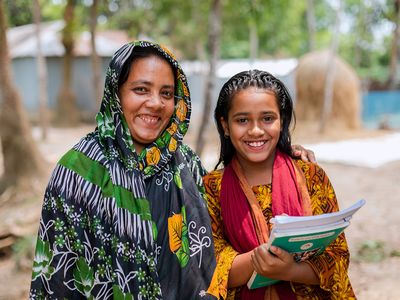
Teachers are recruited from the same community. A typical BRAC teacher is a local woman with 10-12 years of schooling. She receives an initial 12-day training course followed by monthly refresher training. Being from the community, she understands the children's context and earns the trust of parents — especially for sending girls to school.
⏰ Flexible Timing
School hours are decided by parents and teachers together. Lessons may start as early as 6 AM or as late as 10 AM. Some schools run two shifts. This flexibility ensures that education fits into rural life — children can still help at home or work without dropping out.
📖 Learner-Centered Pedagogy
BRAC classrooms are nothing like traditional rote-learning environments. The methods include:
- Small group activities and peer discussions
- Role-playing and storytelling
- Singing, dancing, drawing, and crafts
- Question-and-answer sessions
- Field trips and hands-on learning
4. Community Ownership: The Secret Sauce
BRAC understands that no education program can succeed without the community's buy-in. That's why community involvement is woven into every layer of the program:
- School Management Committees (SMC): Each school has a 7-member SMC that oversees operations, teacher attendance, and student transitions to secondary school.
- Parents' Forums: Monthly meetings are held where parents discuss their roles in their children's education, attendance, and hygiene.
- Mothers' Forums: Special meetings for mothers to raise awareness about girls' education and prevent child marriage.
- Community Elders: They attend club-opening ceremonies and lend social legitimacy to the programs.
This deep community integration creates a sense of shared ownership that keeps children in school and ensures the program's sustainability.
5. Monitoring & Quality Assurance
BRAC operates a rigorous, multi-layered monitoring system to maintain educational quality:
Three-Tier Supervision
- Branch Office (Upazilla/Union Level): Programme Organizers (POs) act as grassroots supervisors, each overseeing multiple schools.
- Area & Regional Offices: Area Education Managers (AEMs) and Regional Managers (RMs) coordinate activities, develop plans, and monitor both schools and finances.
- Central Office: A dedicated unit at BRAC headquarters manages all components, reporting to the Programme Manager and Director of BEP.
Supervisors conduct random classroom visits, attend all classes on a given day, assess teacher-student interactions, and share feedback immediately. Results are discussed with teachers who then take corrective measures with students.
6. Innovation in Crisis: Adapting to Challenges
BRAC's education model has proven remarkably adaptable during crises:
📻 Radio School (COVID-19)
When Bangladesh endured the world's longest school lockdown during the COVID-19 pandemic, BRAC launched "Radio School" — broadcasting lessons through community radio stations. Teachers hosted interactive shows with rhymes, stories, songs, and crafts that parents could facilitate at home using everyday objects.
📞 Phone-Based Learning
BRAC teachers conducted group calls with 3-4 students and their parents, reaching over 83,000 children during the pandemic. Every sixth day was reserved for students with disabilities or those who had fallen behind.
🚤 Boat Schools
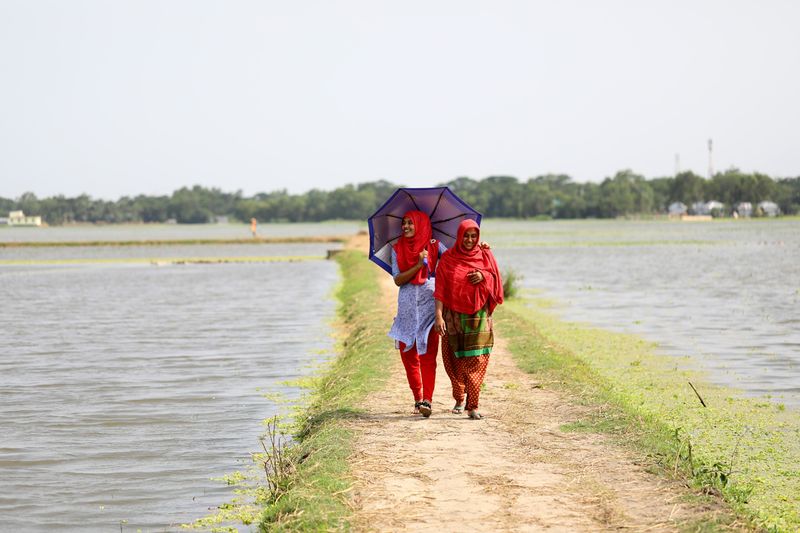
In flood-prone regions of Bangladesh, BRAC runs floating schools on boats — ensuring that education continues even when villages are submerged during monsoon season.
7. Global Replication & Impact
The BRAC model has been so successful that it has been replicated both nationally and internationally:
- In Bangladesh: 714 smaller partner NGOs apply the BRAC non-formal school model in remote areas.
- Internationally: The model has been adapted in Afghanistan, Pakistan, Uganda, Tanzania, South Sudan, and Liberia.
- Adolescent Empowerment: The ELA (Empowerment and Livelihood for Adolescents) program now operates in 5 African countries, reaching over 93,000 girls.
8. The BRAC Philosophy: Education as Empowerment
At its core, BRAC's education program is not just about literacy and numeracy. It is about empowerment. Every component — from the pre-primary classroom to the adolescent girls' club — is designed to help children and young people realize their potential and break free from the cycle of poverty.
BRAC's vision is "a world free from all forms of exploitation and discrimination where everyone has the opportunity to realize his or her potential." Its education program is perhaps the most powerful tool in making that vision a reality.
🎯 Final Thoughts
The BRAC Education Programme proves that quality education doesn't require marble buildings or expensive technology. What it requires is community trust, local ownership, flexible design, and unwavering commitment to the most marginalized. From 22 schools to a global education empire — BRAC's journey is a testament to what is possible when we put children first.