
In Bangladesh, an estimated 1.6 million children live with disabilities, yet fewer than 11% ever step inside a classroom. Deep-rooted stigma, inaccessible infrastructure, and a lack of trained teachers keep countless young minds locked out of learning. BRAC is dismantling these barriers through its Inclusive Education Programme — creating spaces where every child, regardless of ability, can thrive.
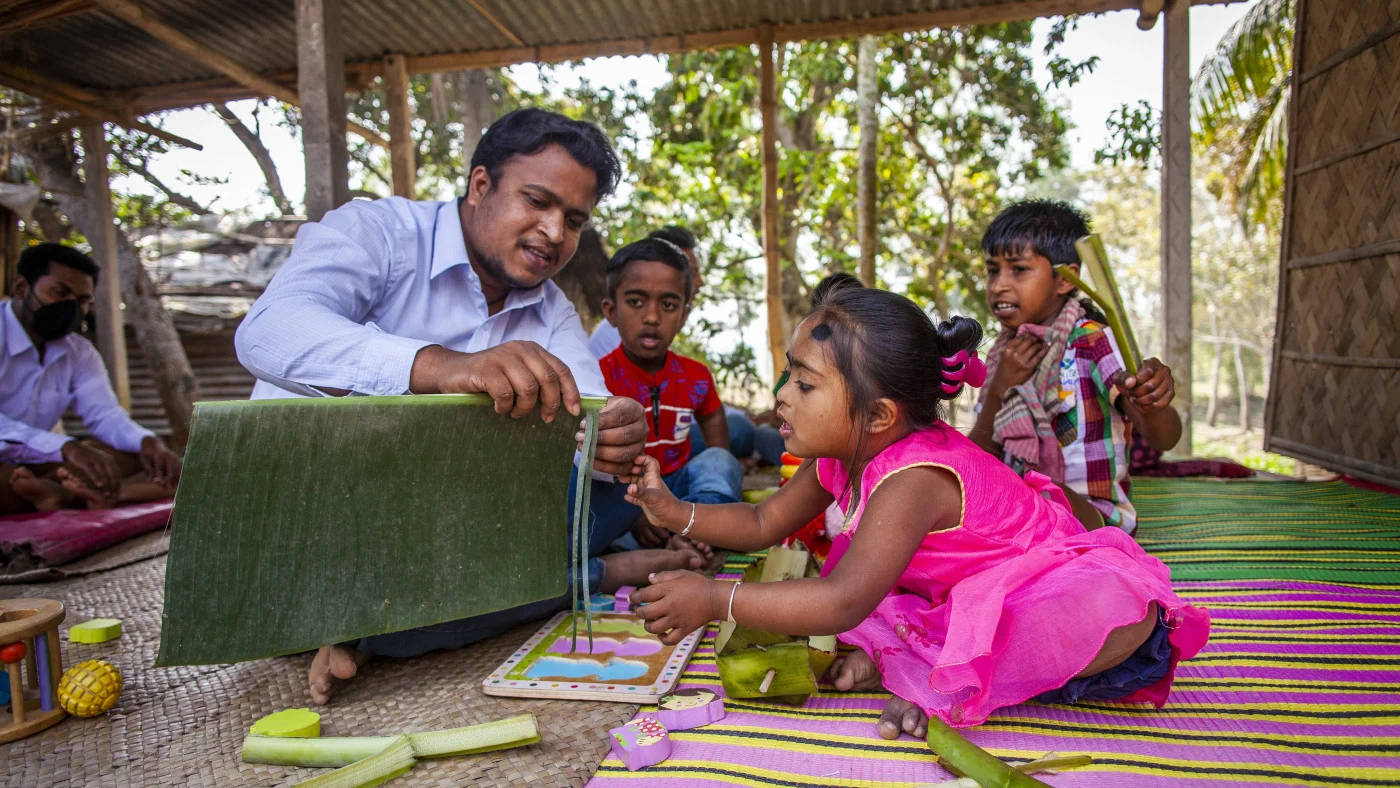
A young learner engages in sensory play at a BRAC Inclusive Education centre
Rafiq's Story
Born with a hearing impairment in a remote village of Kurigram, Rafiq spent his early years watching other children walk to school from the window of his family's tin-shed home. His parents, struggling to make ends meet as agricultural labourers, believed education was simply not meant for a child like him. By the age of nine, Rafiq had never held a pencil, never spoken a word to a teacher, and had begun to believe he was invisible.
"I thought the world had no sound for me. Then Miss Shireen taught me that my hands could speak louder than any voice ever could."
No child left on the margins
BRAC's Inclusive Education Programme reaches children with disabilities who have been systematically excluded from formal schooling — whether due to physical barriers, social prejudice, or the absence of specialised support. Launched in 2003 with just 12 pilot schools, the initiative has grown into a nationwide movement, now serving over 14,000 children with disabilities across 43 districts through specialised learning centres and integrated mainstream classrooms.
Key Statistics:
- 62% of enrolled students are girls
- 94% retention rate after three years
- 8,400+ children successfully transitioned to mainstream schools
How are children reached?
The programme deploys a multi-layered identification strategy:
- Partnerships with local government health workers and disability committees
- Community mapping led by trained BRAC staff and parent volunteers
- Collaboration with traditional birth attendants and rural clinics
Once identified, each child undergoes a comprehensive assessment to design an Individualised Education Plan (IEP) tailored to their specific needs and potential.
Students in a BRAC inclusive learning environment
Learning designed around the child
Each BRAC Inclusive Education centre accommodates 20–25 learners aged 6–14, with dedicated support for visual, hearing, intellectual, and physical impairments. The programme features:
- Sign language and Braille instruction delivered by certified specialists
- Therapeutic support including physiotherapy and speech therapy sessions
- Adapted teaching aids and assistive devices crafted from low-cost local materials
- Intensive sensitisation training for parents, siblings, and community members
Resilience in the face of disaster
As Bangladesh faces increasingly severe flooding and cyclones, BRAC has adapted its inclusive education model to protect its most vulnerable learners:
- Elevated, disability-accessible learning shelters in flood-prone regions
- Emergency go-bags with personalised medical and communication tools
- Peer buddy systems to ensure no child is left behind during evacuations
- Post-disaster psychosocial first aid and trauma-informed teaching
Rafiq Finds His Voice
Today, Rafiq communicates fluently through sign language and has mastered basic numeracy and Bengali literacy. With BRAC's support, he was recently admitted to a local mainstream primary school, where a trained inclusive education facilitator supports his integration:
"My favourite subject is drawing. I want to become a teacher one day, so I can show every child like me that we are not broken — we are just learning in a different way."
His mother now serves as a community ambassador, encouraging other families to enrol their children with disabilities rather than hiding them away.
The BRAC Inclusive Education Programme is supported by a coalition of international partners committed to achieving Sustainable Development Goal 4 — quality education for all. By proving that children with disabilities can learn, lead, and dream when given the right support, BRAC is reshaping Bangladesh's educational landscape one classroom at a time.
Since 1985, BRAC has been a pioneer in non-formal education, reaching more than 15 million students across Bangladesh and beyond. Its inclusive education model demonstrates that with adapted curricula, trained teachers, and community buy-in, every child — regardless of physical or cognitive ability — can access the transformative power of learning.